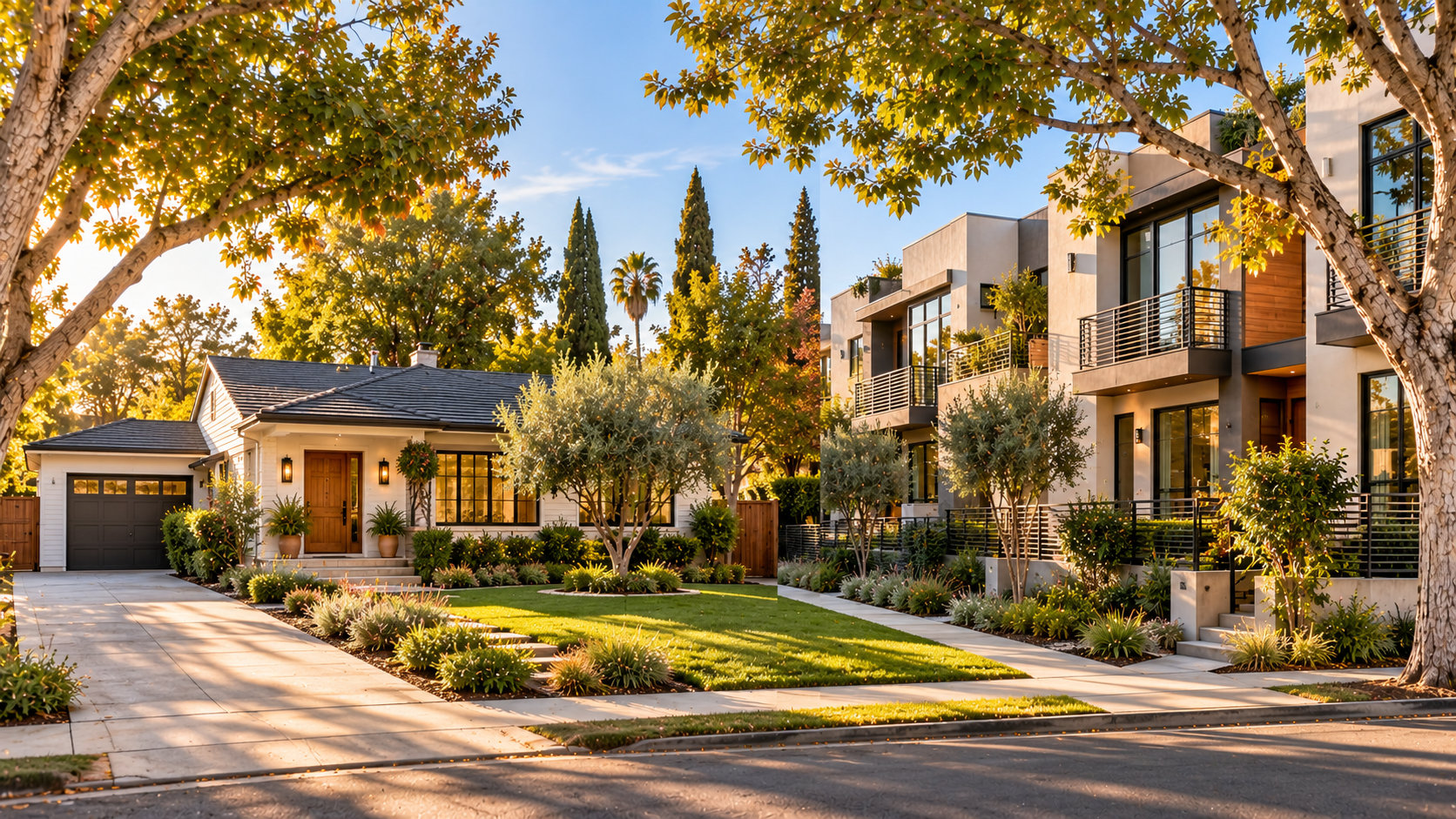
When comparing Valley Village single-family homes vs. townhouses, buyers should look beyond the listing price and consider how each property type fits their lifestyle, budget, and long-term plans. Located in the San Fernando Valley area of Los Angeles, Valley Village offers residential settings that may appeal to buyers seeking more space, a neighborhood atmosphere, and convenient access to nearby communities.
Single-family homes often attract buyers who prioritize privacy, a private yard, and greater control over their property. Townhouses can appeal to those who prefer a multi-level home with less exterior maintenance or a different balance between space and ownership responsibilities. The actual experience depends on the property’s design, condition, lot, homeowners association rules, and location.
Neither option is automatically the better choice. A well-maintained townhouse may suit one buyer’s needs better than a larger detached house, while a single-family home may be the right fit for someone who values outdoor space and flexibility.
Understanding the key differences can help you make a more informed decision when searching for a home in Valley Village.
Understanding Single-Family Homes in Valley Village, CA
Single-family homes are typically detached residences situated on individual lots. In Valley Village, available properties can vary in age, architectural style, size, condition, and outdoor space. Buyers should evaluate each home individually rather than assuming every detached property offers the same benefits.
Privacy and Personal Space
One of the main attractions of a single-family home is the potential for greater separation from neighboring residences. Detached construction can reduce shared-wall noise and provide more control over how indoor and outdoor spaces are used.
Privacy still depends on the specific property. Lot dimensions, neighboring windows, fences, landscaping, street activity, and the placement of outdoor living areas can all influence how secluded a home feels.
During a viewing, look beyond the interior rooms. Check the backyard, side yards, patio, and bedroom windows to understand the relationship between the home and surrounding properties.
For buyers who work from home, entertain regularly, or prefer a quieter setting, privacy may be an important part of the decision.
Private Yards and Outdoor Living
Many single-family homes offer a private yard, although the size and usability of the outdoor area vary. A yard can provide room for gardening, outdoor dining, recreation, pets, or simply relaxing at home.
Before purchasing, consider how much outdoor space you actually need. A large yard may be appealing, but it can also require regular landscaping, irrigation, tree care, and repairs to fences or hardscaping.
Evaluate sunlight, drainage, shade, privacy, and the condition of existing outdoor features. If you plan to add a pool, accessory structure, or major landscaping improvements, investigate applicable zoning, permitting, and other requirements before assuming the project will be possible.
A smaller, well-designed yard may be more practical than a larger space that requires significant work.
Flexibility for Renovations and Personalization
Single-family homeowners may have more flexibility to make changes to their property than owners in some townhouse communities. Depending on local rules and the property’s constraints, potential projects might include updating the kitchen, reconfiguring interior spaces, improving the yard, or adding outdoor amenities.
However, ownership does not mean every change is permitted. Renovations may require building permits, zoning review, inspections, or compliance with other local requirements. Easements, lot coverage limits, setbacks, and historic or other restrictions may also affect what is possible.
Before buying a property with renovation plans in mind, confirm the relevant requirements and obtain professional advice when necessary.
Maintenance and Ownership Responsibilities
A detached home generally places more direct responsibility on the owner for exterior maintenance. Depending on the property, this can include roofing, exterior paint, drainage, landscaping, fencing, pest prevention, and repairs to outdoor structures.
The level of maintenance depends on the home’s age, construction quality, previous improvements, and current condition. An updated home may require fewer immediate repairs than an older property with deferred maintenance, but no home is entirely maintenance-free.
Buyers should arrange a professional inspection and review available disclosures. Estimate the cost of likely repairs and ongoing upkeep before deciding how much house fits comfortably within the budget.
What to Know About Townhouses in Valley Village
Townhouses can offer a different ownership experience, often combining multi-level living space with shared walls or common areas. Some communities include shared landscaping, driveways, parking areas, recreational amenities, or other facilities. Features and responsibilities differ from one development to another.
Efficient Use of Space
Townhouses often use vertical layouts, with living areas, bedrooms, and other rooms distributed across multiple floors. This arrangement can provide useful separation between spaces without requiring the same lot size as a detached home.
For example, a multi-level layout may separate entertaining areas from bedrooms or provide a dedicated work area. The design can be practical for buyers who want several distinct living zones.
However, stairs may be a disadvantage for some households. Buyers should consider accessibility, the location of bedrooms and laundry facilities, storage, natural light, and how easy it is to move between floors.
The number of rooms alone does not determine whether a property will feel comfortable. Evaluate how the layout supports your daily routine.
Shared Walls and Community Layout
Many townhouses share one or more walls with neighboring units. The effect on privacy and noise depends on the building’s construction, insulation, layout, and the behavior of nearby residents.
During a showing, listen for noise and examine the placement of bedrooms, living rooms, and shared walls. If possible, ask about sound transmission and review available disclosures concerning past noise issues.
The wider community layout matters as well. Look at the distance between units, parking arrangements, visitor parking, landscaping, lighting, and access to entrances.
A townhouse community may provide a comfortable residential environment, but buyers should confirm that the design and rules align with their preferences.
Homeowners Association Fees and Rules
Some townhouse communities are governed by a homeowners association (HOA), although arrangements vary. HOA fees may contribute to the maintenance of shared areas, building components, insurance for common elements, amenities, and other expenses specified by the governing documents.
Do not assume that the HOA covers every exterior repair or all building maintenance. Responsibilities can differ significantly between communities and even between types of property ownership.
Before making an offer, review the HOA’s governing documents, budget, reserve information, meeting minutes, insurance coverage, and any available information about special assessments or planned projects.
Also examine the rules affecting pets, parking, rentals, renovations, and use of common areas. These restrictions may influence how comfortably the property fits your lifestyle.
Lower Maintenance Does Not Mean No Maintenance
Townhouse ownership may reduce some individual maintenance responsibilities when certain exterior elements or shared areas are handled by the HOA. However, the extent of that benefit depends on the association’s governing documents and the structure of the development.
Owners may still be responsible for interior repairs, appliances, plumbing components, windows, doors, or other elements assigned to the unit owner. HOA fees also represent a recurring expense, and unexpected assessments may arise if shared expenses exceed available funds.
Review the division of responsibilities carefully. A townhouse with a lower purchase price may not be less expensive to own once association fees, insurance, utilities, and potential assessments are considered.
Comparing Costs, Lifestyle, and Resale Considerations
The best way to compare Valley Village single-family homes and townhouses is to evaluate the complete ownership picture. Purchase price matters, but so do ongoing expenses, the property’s condition, the way you live, and the features that may appeal to future buyers.
Purchase Price and Monthly Expenses
Single-family homes and townhouses can occupy different price ranges, but neither property type is consistently more affordable in every situation. Pricing depends on location, square footage, condition, lot size, layout, parking, amenities, and market conditions.
When comparing options, calculate the likely monthly cost of each property. Include mortgage payments, property taxes, insurance, utilities, maintenance, and any HOA fees.
For a detached home, budget for repairs and exterior upkeep that may occur irregularly. For a townhouse, examine HOA fees and available reserve funds, as well as the possibility of special assessments.
Ask for estimates where costs are uncertain. A realistic ownership budget can help you avoid choosing a property that fits the purchase price but strains your finances over time.
Lifestyle and Household Needs
A single-family home may be attractive to buyers who want a private yard, greater separation from neighbors, or more control over exterior spaces. A townhouse may appeal to those who prefer a more compact footprint or shared maintenance arrangements.
Consider your current and anticipated needs. Do you regularly entertain outdoors? Do you have pets? Do you need a home office? Are stairs practical for everyone in the household? Would you rather maintain a yard or pay association fees for certain shared services?
Think about your daily routine as well as your long-term plans. A property should work for how you actually live, not just how it looks during a showing.
Location, Parking, and Neighborhood Access
The individual location can be as important as the property type. Two homes in Valley Village may have different levels of access to shops, schools, dining, parks, major roads, and public transportation.
For a single-family home, review driveway access, garage space, street parking, and the effects of the surrounding street. For a townhouse, confirm assigned parking, guest parking availability, garage dimensions, and any HOA restrictions.
If commuting is important, test the routes during the times you would normally travel. If you value walking access, visit the nearby streets and check the actual pedestrian routes.
Also consider noise, lighting, traffic, and the character of the immediate block. A property that meets your space requirements may still be less suitable if its location does not support your routine.
Resale Value and Long-Term Flexibility
Both single-family homes and townhouses can appeal to future buyers, but resale outcomes depend on more than property type. Location, condition, layout, pricing, maintenance history, and market demand all play a role.
A detached home with a functional floor plan and usable outdoor space may attract buyers who prioritize privacy. A townhouse with convenient parking, a practical layout, and a well-managed HOA may appeal to buyers seeking a different balance of space and maintenance.
For townhouse purchases, the HOA’s financial health and maintenance practices can affect buyer confidence. For detached homes, the condition of the roof, major systems, yard, and other property components may influence marketability.
Review comparable sales for similar properties and consult a local real estate professional about the features buyers are responding to in the current market. Avoid relying on broad assumptions that one property type will always appreciate faster than another.
Frequently Asked Questions About Valley Village Single-Family Homes vs. Townhouses
1. Are single-family homes in Valley Village more expensive than townhouses?
Not always. Prices depend on the property’s size, condition, location, lot, parking, and amenities. Some townhouses may be less expensive to purchase than comparable detached homes, but HOA fees and other expenses can affect the total cost of ownership. Compare similar properties and calculate all recurring costs before deciding.
2. What are the main advantages of buying a townhouse in Valley Village?
Potential advantages include a multi-level layout, a smaller private outdoor area to maintain, and shared maintenance arrangements in some communities. Townhouses may also offer features such as assigned parking or shared amenities. Buyers should verify the HOA’s responsibilities, fees, financial condition, and rules before purchasing.
3. Do single-family homes offer more privacy than townhouses?
A detached home generally avoids shared walls, which may offer more separation from neighboring residences. However, privacy depends on lot size, landscaping, window placement, street activity, and nearby development. Some townhouses are designed with good separation and sound control, so inspect the specific property rather than relying on the category alone.
4. What should I check before buying a townhouse with an HOA?
Review the governing documents, budget, reserve study or available reserve information, meeting minutes, insurance coverage, rules, and disclosures concerning special assessments or planned repairs. Confirm which maintenance responsibilities belong to the HOA and which belong to the owner. Consider consulting qualified professionals if the association’s finances or responsibilities are unclear.
5. Which is a better long-term investment in Valley Village: a single-family home or a townhouse?
Neither is automatically the better investment. Long-term performance depends on the purchase price, property condition, location, ongoing expenses, market conditions, and future buyer demand. Compare recent sales of similar homes, account for maintenance and HOA costs, and consider how well each property fits your financial plans and lifestyle.
Ready to Find the Right Home in Valley Village?
If you’re weighing single-family homes against townhouses in Valley Village, Cathleen Cull of Rodeo Realty Fine Estates can help you compare properties based on your budget, preferred lifestyle, and long-term goals. Reviewing location, condition, ownership costs, and comparable sales can help you make a confident and informed decision.