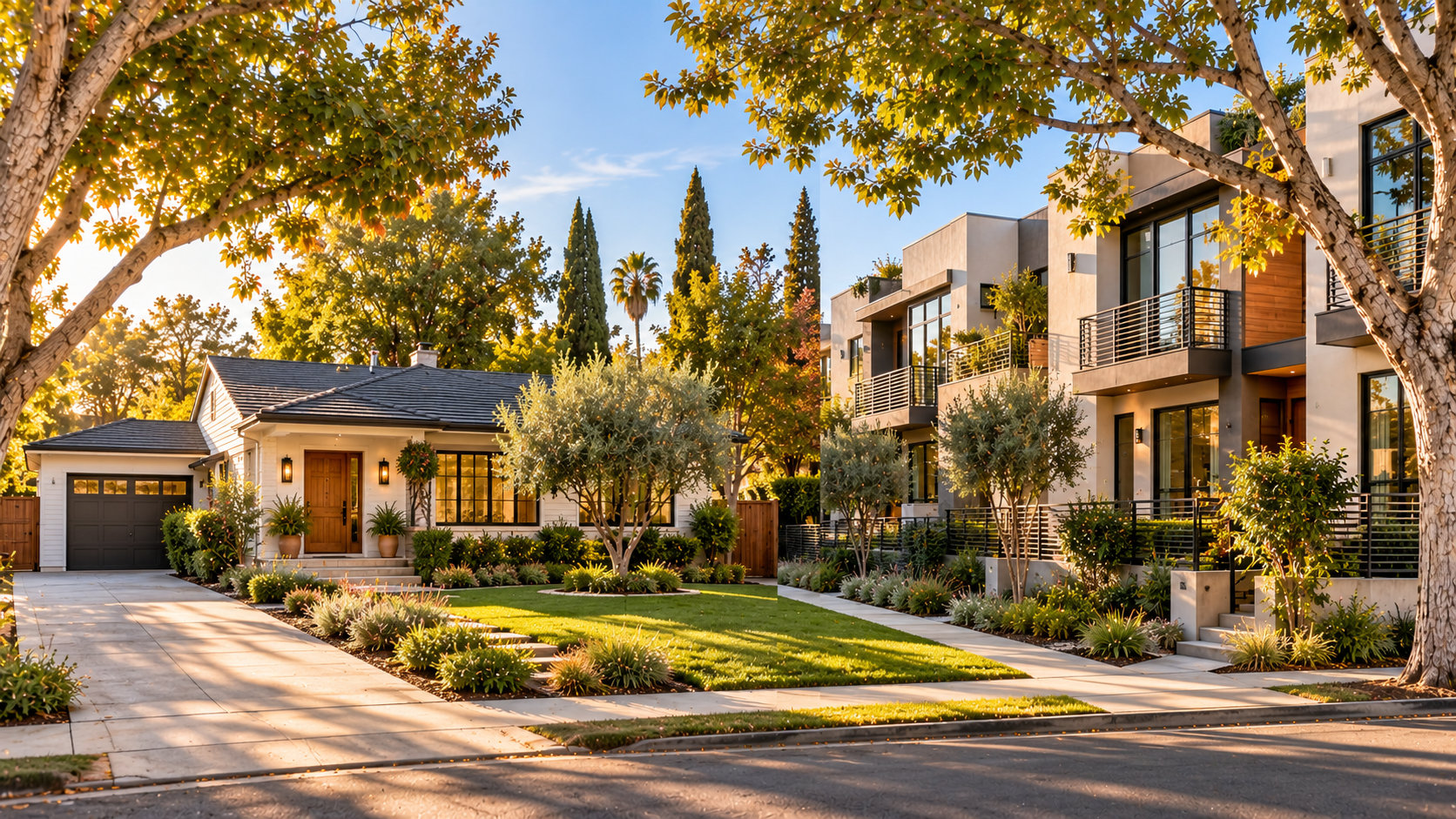
Choosing between San Fernando Valley vs. Thousand Oaks homes means comparing two Southern California residential markets with different community settings, housing options, and everyday lifestyles. Both may appeal to buyers seeking more space, access to outdoor recreation, and a residential environment within reach of greater Los Angeles, but the right choice depends on your budget, commute, property preferences, and long-term plans.
The San Fernando Valley encompasses numerous communities, including Sherman Oaks, Studio City, Valley Village, Encino, and other neighborhoods with a wide range of housing styles. Buyers can explore everything from condominiums and townhouses to traditional single-family homes and luxury estates.
Thousand Oaks, located in Ventura County, offers a different suburban setting with established neighborhoods, single-family residences, townhomes, and properties in areas with access to parks and open space. Individual neighborhoods vary in home prices, lot sizes, amenities, and access to employment and services.
Neither market is automatically better for every buyer. Comparing specific properties, transportation needs, total ownership costs, and preferred lifestyle can help you determine which location is the best fit.
Understanding the San Fernando Valley Housing Market
The San Fernando Valley offers a diverse residential market spread across multiple neighborhoods. This variety gives buyers opportunities to compare home styles, price points, lot characteristics, and access to local amenities within the broader Los Angeles area.
Variety of Home Styles and Property Types
One of the main advantages of exploring the San Fernando Valley is the range of available housing options. Depending on the neighborhood, buyers may find condominiums, townhouses, detached single-family homes, renovated mid-century properties, and contemporary luxury residences.
In communities such as Sherman Oaks and Studio City, some buyers prioritize architectural character, outdoor entertaining areas, or proximity to restaurants and retail along Ventura Boulevard. Others focus on larger homes, flexible floor plans, or properties that accommodate multigenerational living.
Valley Village may appeal to buyers seeking a residential neighborhood with a mix of detached homes and attached housing options. Other Valley communities offer different combinations of property types, amenities, and access to major roads.
This variety means buyers should avoid treating the San Fernando Valley as one uniform housing market. Prices and property characteristics can vary significantly between neighborhoods and even between nearby streets.
Urban Convenience and Everyday Amenities
Many San Fernando Valley neighborhoods provide access to shopping centers, grocery stores, restaurants, healthcare providers, schools, and recreational facilities. The exact convenience depends on the home’s location and the destinations you use most frequently.
For buyers who enjoy dining out or having errands close to home, certain neighborhoods offer access to established commercial corridors. Other areas may provide a quieter residential environment while remaining a short drive from major services.
When evaluating a home, map your regular destinations and test the routes you would take. Consider grocery shopping, commuting, school drop-offs, healthcare, and weekend activities.
A property’s location can influence daily convenience just as much as its interior features. A smaller home in a well-connected location may suit your routine better than a larger property that requires more driving.
Commuting Within Los Angeles and Beyond
The San Fernando Valley connects to other parts of Los Angeles through major roads and regional transportation options. However, commute times can vary substantially depending on the neighborhood, destination, time of day, and traffic conditions.
Buyers who work in the San Fernando Valley may prefer a home that minimizes routine travel. Those commuting to other parts of Los Angeles should evaluate freeway access, alternative routes, and available transit options where appropriate.
Do not rely exclusively on a property’s advertised proximity to a major road. Traffic congestion, local street access, and parking can affect the practical commute experience.
Before making a decision, test your likely route during the times you normally travel. If you commute several days each week, even a modest difference in travel time may affect your quality of life over the long term.
Outdoor Living and Neighborhood Character
The San Fernando Valley includes established residential streets, parks, recreational facilities, and neighborhoods with a variety of outdoor environments. Depending on the property, buyers may find private yards, patios, pools, mature landscaping, or access to nearby hiking and recreation areas.
The experience varies by location. A home in a walkable neighborhood near restaurants may offer a different lifestyle from a larger property on a quieter residential street.
Consider how much outdoor space you want and how much maintenance you are prepared to handle. A large yard or pool can provide valuable recreation and entertaining space, but it may also increase ongoing costs.
Explore the surrounding streets in person and evaluate noise, privacy, traffic, landscaping, and access to the amenities you value most.
Exploring Homes and Lifestyle in Thousand Oaks, CA
Thousand Oaks offers a suburban residential environment in Ventura County, with a variety of housing styles and access to outdoor recreation. Buyers considering the area should compare individual neighborhoods rather than assume every part of the city offers the same experience.
Residential Neighborhoods and Housing Options
Thousand Oaks includes a mix of detached single-family homes, townhouses, condominiums, and higher-end residences. Property characteristics vary according to neighborhood, lot size, age, architectural style, and proximity to local amenities.
Some buyers are drawn to traditional suburban homes with private yards and garage parking. Others may prefer a townhouse or condominium that offers a different balance of space, maintenance responsibilities, and purchase price.
As in the San Fernando Valley, the price of a home depends on more than its location. Square footage, property condition, renovations, outdoor amenities, and the surrounding street can all influence value.
When comparing homes, identify your essential requirements first. Decide how many bedrooms you need, whether a home office is important, how much outdoor space you want, and which features justify paying more.
Access to Parks and Outdoor Recreation
Thousand Oaks is often considered by buyers who value access to parks, trails, and open space. Outdoor recreation can be an important part of the lifestyle for residents who enjoy hiking, walking, cycling, and spending time in natural surroundings.
However, access depends on the specific property’s location. A home may be close to a trail or park, while another may require a drive to reach the same amenities.
Visit nearby recreational areas and determine how easily they fit into your routine. Consider trail access, parking, operating rules, accessibility, and the time needed to reach the places you plan to use.
Also evaluate the home’s own outdoor space. A property with a usable yard or patio may be particularly appealing if you want to combine private outdoor living with access to public recreation.
A Suburban Setting and Daily Routine
For some buyers, Thousand Oaks offers the type of suburban environment they are seeking: residential neighborhoods, local services, and opportunities to spend time outdoors. The precise experience depends on the community and its proximity to shopping, schools, workplaces, and major roads.
Buyers should consider how much driving their daily routine will require. A home that feels peaceful during a weekend visit may involve longer trips to work, school, or regular appointments.
Explore the neighborhood during both weekdays and weekends. Observe traffic, parking, street activity, and the distance to essential services.
If you are relocating from the San Fernando Valley, consider whether the differences in neighborhood layout and transportation will suit your household. The best choice should support your preferred pace of life without creating unnecessary daily inconvenience.
Schools, Services, and Community Amenities
School access and local services can be important factors for buyers evaluating Thousand Oaks. School assignments, enrollment requirements, and available programs depend on the specific property and the relevant district.
If school access is a priority, verify the home’s current assignment directly with the school district. Do not assume that a listing’s description guarantees eligibility for a particular school.
Also evaluate access to grocery stores, medical services, childcare, shopping, dining, and other everyday needs. These factors can influence how convenient a location feels once you move in.
A property may offer a desirable setting, but its suitability depends on the combination of home features, transportation, services, and household priorities.
Comparing Home Prices, Ownership Costs, and Long-Term Value
A meaningful comparison between the San Fernando Valley and Thousand Oaks requires more than looking at listing prices. Buyers should assess total ownership costs, location-specific advantages, property condition, and the potential trade-offs associated with each home.
Purchase Prices and Property Value
Neither the San Fernando Valley nor Thousand Oaks is consistently less expensive across every property type and price range. The San Fernando Valley contains many distinct neighborhood markets, while Thousand Oaks also has variation between neighborhoods and housing categories.
A condominium in one area may cost less than a detached home in another, while a luxury property in either market may command a substantial premium because of its size, condition, lot, or amenities.
For an accurate comparison, review recent comparable sales for homes with similar features. Consider the sale date, square footage, lot size, renovations, parking, and location.
Avoid relying on broad citywide averages alone. They may combine properties that appeal to very different buyers and may not accurately represent the home you are considering.
Property Taxes, Insurance, and Maintenance
The purchase price is only one part of the cost of owning a home. Buyers should also consider property taxes, homeowners insurance, utilities, routine maintenance, and possible renovation expenses.
For condominiums and townhouses, HOA fees may contribute to the cost of ownership. Review the association’s budget, reserves, insurance arrangements, governing documents, and any disclosed special assessments.
For detached homes, budget for repairs to the roof, plumbing, electrical systems, exterior finishes, landscaping, and other major components. Homes with pools or extensive outdoor areas may require additional ongoing maintenance.
Insurance premiums and coverage can vary by property characteristics and location. Obtain property-specific insurance estimates before committing to a purchase, particularly if the home has features that may affect coverage or replacement costs.
Commute, Transportation, and Lifestyle Costs
Transportation can be an important part of the comparison between the San Fernando Valley and Thousand Oaks. The better choice depends on where you work, how often you commute, and which destinations are central to your life.
A home with a lower purchase price may not provide the best overall value if it adds substantial time or expense to your routine. Conversely, a more expensive property may be worthwhile if it significantly improves access to work or important amenities.
Estimate your recurring transportation costs, including fuel, vehicle maintenance, parking, and transit where applicable. Consider how often you travel and whether your schedule is likely to change.
Testing your commute before purchasing can reveal practical differences that are not obvious from a listing or map.
Resale Potential and Long-Term Fit
Both the San Fernando Valley and Thousand Oaks offer homes that may appeal to future buyers, but resale performance depends on the individual property and the market conditions at the time of sale.
Location, property condition, functional layout, outdoor space, parking, and access to amenities can all influence buyer interest. A home that meets a clear set of buyer needs may be easier to market than one with a less practical layout or significant maintenance concerns, although no outcome is guaranteed.
Think about how your needs may change over the next several years. Consider work arrangements, household size, accessibility, maintenance preferences, and your plans for the property.
The right home should fit your current budget and lifestyle while remaining manageable if your circumstances change.
Frequently Asked Questions About San Fernando Valley vs. Thousand Oaks Homes
1. Is it cheaper to buy a home in the San Fernando Valley or Thousand Oaks?
There is no universal answer because both markets include a range of neighborhoods and property types. Prices depend on location, size, condition, lot characteristics, and amenities. Compare recent sales of similar homes in the specific areas you are considering rather than relying only on broad regional averages.
2. Is Thousand Oaks a good alternative to the San Fernando Valley?
Thousand Oaks may appeal to buyers seeking a suburban setting and access to outdoor recreation. The San Fernando Valley may suit those who prioritize particular Los Angeles neighborhoods, commercial corridors, or commute routes. The better option depends on your budget, daily routine, housing preferences, and desired community setting.
3. Which area offers better homes for families?
Both areas offer a variety of property types and residential environments that may suit different households. Compare the layout, number of bedrooms, outdoor space, nearby services, transportation, and verified school assignments of individual properties. Your household’s needs and budget are more useful decision criteria than a broad regional label.
4. How do commute times compare between Thousand Oaks and the San Fernando Valley?
Commute times depend on the specific origin and destination, departure time, traffic, and transportation method. A home in one part of the San Fernando Valley may provide a convenient commute for one buyer but not another. Test your actual route during typical travel hours before making a decision.
5. What should I consider before moving from the San Fernando Valley to Thousand Oaks?
Evaluate home prices, total ownership costs, commute requirements, access to services, neighborhood character, outdoor recreation, and the property types available within your budget. Visit the neighborhoods at different times and compare homes in person. A careful comparison will help you determine whether the move aligns with your priorities.
Ready to Find the Right Home for Your Lifestyle?
If you’re comparing homes in the San Fernando Valley and Thousand Oaks, Cathleen Cull of Rodeo Realty Fine Estates can help you evaluate properties based on your budget, preferred lifestyle, and long-term goals. By comparing location, property condition, comparable sales, and ownership costs, you can make a more informed decision about where to buy.